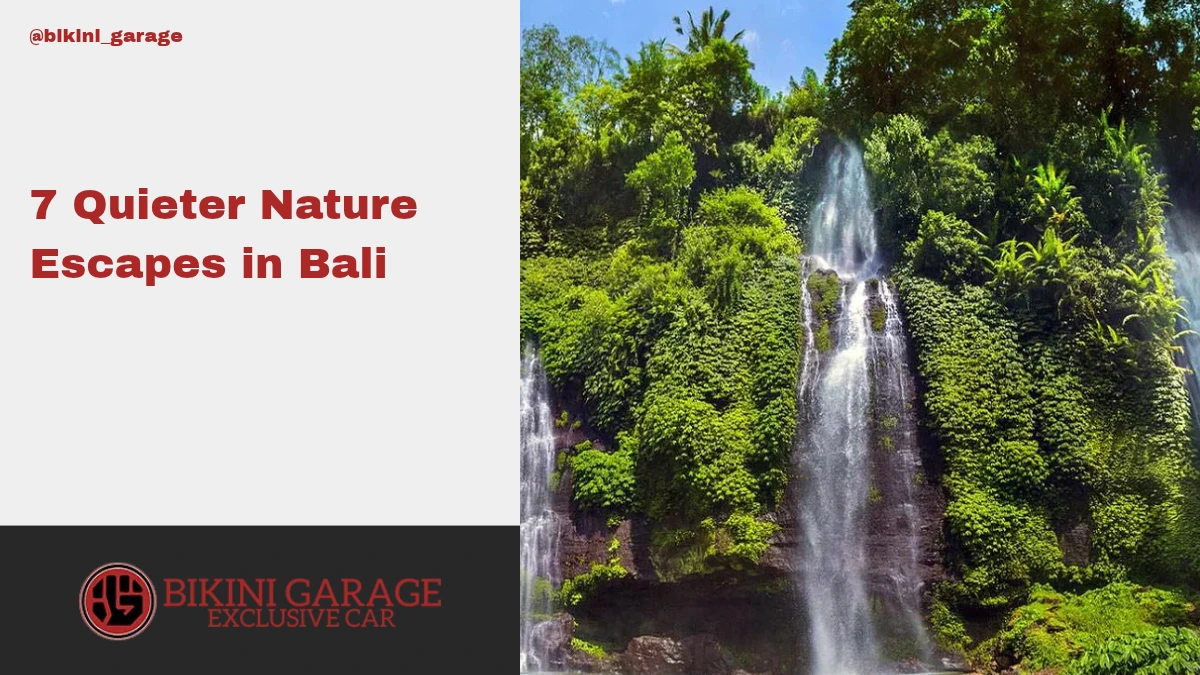
Bali’s busiest destinations are only part of the island. Waterfalls, highland lakes, grassy eastern landscapes and less-developed coastal stretches can offer a different pace.
These seven nature trips come from the original guide. “Quieter” is relative: visitor numbers, development and access change. No destination is guaranteed empty, privately yours or free of hazards. All older prices and travel times below are references to confirm before setting off.

Sekumpul’s forest setting and major falls make it a memorable northern-Bali outing. The name refers to a cluster of nearby waterfalls, with the source describing seven in the wider area and two prominent adjacent streams.
Its precise 100–150-metre height figures and accounts of different water sources should not be treated as measurements of every cascade. Rain can change colour, volume and access; mist or a rainbow is possible, not guaranteed.
The source describes roughly 350–365 steps and steep sections towards the falls. Hire an appropriate local guide, carry water and wear grippy shoes. A natural pool is not automatically safe for swimming; follow current local advice, avoid strong flows and stay away from falling-water impact zones.
Gitgit, Munduk and Yeh Mampeh are separate northern routes, not all 20-minute add-ons. Lovina can be a useful base, but do not plan a 30-minute hotel-to-Sekumpul transfer without checking your starting point. An early guided visit, lunch and a return before dark can be enough for one day. A Lovina sunset does not guarantee dolphin sightings; marine wildlife trips require a suitable operator and respectful conduct.
Bring a change of clothes if needed, avoid heavy-rain conditions and leave no litter. Do not attempt unfamiliar deeper routes alone.

Nyang Nyang offers a long, exposed shoreline beneath southern Bali’s cliffs. It is often described as secluded, but claims of an entirely empty six-to-seven-kilometre beach with no development are not reliable for every section or date.
The source also mentions colourful boat remains used as photo backgrounds. Their presence and accessibility may change; do not make the trip dependent on an old photograph.
Different entrances use different routes, so the source’s fixed 550-step/20–30-minute descent should not be applied universally. Check the current path, fitness demands and safe transport arrangements, including the return climb.
Enjoy the scenery, a permitted beach walk or photography while staying clear of cliffs, shorebreak and incoming tides. Surfing, paragliding and other activities need suitable experienced operators. Do not assume swimming, snorkelling at low tide or cave exploration is safe here.
A daylight beach outing followed by lunch in Pecatu and, if time permits, a booked Uluwatu performance can form a day. Suluban and Balangan are separate visits. The morning coastline can be beautiful, but this southwest-facing coast is not a guaranteed sunrise-over-the-sea viewpoint.
Wear sturdy footwear, travel with a companion or guide where appropriate and avoid wet, unsafe approaches. Keep the load manageable and bring enough water.

Tianyar’s open grassland changes with the seasons, often appearing gold in drier conditions and greener after rain. Mount Agung can provide a dramatic backdrop when visible.
Grazing animals and local livelihoods are part of the landscape. The absence of large predators is not a blanket safety guarantee, and open land should not be treated as unrestricted public access.
Walk only where permitted, take landscape photographs and picnic without damaging vegetation. Camping requires permission and appropriate weather preparation. Do not drive off-road across the grassland without explicit landowner permission and rental authorisation.
Tulamben, Tirta Gangga, Taman Ujung and Amed are broader east-Bali options. A marine activity at Tulamben’s USAT Liberty wreck needs a suitable operator; it is not simply an unplanned swim from a lunch stop. The source’s 15-minute and one-hour connections vary by exact route.
An early arrival, a short permitted walk and one further destination can work better than trying to fit grassland, a dive and water gardens into a rushed day. Dry-season colour often differs from wetter months, but rainfall varies. Bring sun and wind protection, respect livestock and carry out rubbish.

Buyan lies in the highlands near Tamblingan and Beratan. Buyan and Tamblingan are commonly called the twin lakes; the source’s phrase “three twin lakes” is misleading. Beratan is another nearby highland lake.
Forest, gardens and rural activity shape the surroundings. The source gives about 490 hectares and a depth up to 87 metres as reference figures, not guarantees of a particular visitor area or water condition.
Arrange camping, a guided forest walk, fishing or boating only where permitted and with appropriate equipment. A temple visit should follow local rules. Ask before entering strawberry gardens, and avoid assuming recreational boats or constructed swings are available everywhere.
Tamblingan, Bedugul’s botanic garden, Gitgit and Lovina can be included in a wider regional stay. The source’s 20–45-minute transfers depend on your exact entrance. An early lake visit, a manageable walk and local lunch can be followed by Tamblingan if daylight and conditions allow; a Lovina overnight requires another transfer.
Carry warm layers, especially for a camp, and use only authorised fires or facilities. Visit on weekdays if you prefer fewer people, but accept that conditions and crowds vary. Protect the conservation area and avoid unfamiliar roads after dark.

Menjangan is part of the West Bali National Park conservation area and is particularly known for coral and wall-diving landscapes. Its name is associated with deer, but wildlife encounters are never guaranteed.
The original island-area figure of 6,000 square metres is not treated as established. Likewise, 30–50-metre visibility, specific species and consistently calm, pollution-free water are not guarantees: marine conditions change. The official Indonesia Travel overview introduces the island’s marine setting.
There is no visitor accommodation to assume on the island. Ask your operator about toilets, landings and meals; carry water and supplies, and remove all waste. Park permits and guides should be arranged through authorised channels, as described in the official park overview.
Snorkelling sites mentioned include Sandy Slope, Coral Garden and Eel Gardens, with diving suitable only under proper instruction and within certification limits. Island temples require respectful access. Do not approach or feed deer, improvise a kayak trip or assume an unguided route is allowed.
Stay around Pemuteran or another suitable base, depart with a licensed operator, enjoy a manageable number of marine stops and return within the agreed safe window. Pemuteran’s reef-conservation setting and Pulaki Temple are separate mainland visits. Do not touch coral, feed fish or stay overnight without explicit lawful arrangements.

Gunung Payung sits beneath limestone cliffs near Kutuh, with a temple in the wider area. The source describes about 200 steep steps, but access routes and managed transport can change, so check the current arrangement.
The sand and cliffs are the main attraction. Swimming, surfing or snorkelling should depend on conditions, local advice and experience, not on clear-looking water. Avoid assuming it is a private beach merely because it is quieter on one visit.
An earlier outing of two or three hours can be followed by lunch, Pandawa, GWK or a Jimbaran dinner if the route fits. The source’s 15–40-minute regional estimates are not fixed. Wear footwear with grip, carry water and leave before access routes become dark or slippery.

Bukit Asah around Bugbug combines grassy hills, cliffs and sea views. In clear conditions the wider Lombok Strait landscape may be visible, but an unobstructed Rinjani view and complete solitude are not guaranteed.
Arrange permitted walks, landscape photography or a campsite with suitable preparation. Keep clear of cliff edges, use a guide on unfamiliar routes and do not assume an east-facing coastal viewpoint offers sunset directly over the sea.
Taman Ujung, Tirta Gangga and Amed are additional east-Bali destinations, not necessarily short neighbouring stops. An early hill visit and one water garden can make a more comfortable day than racing between them. If staying in Amed, enjoy evening light without expecting a west-facing ocean sunset.
Bring sturdy footwear, water, food and a charged phone/power bank. Check weather, access and return arrangements; do not walk an unfamiliar exposed route alone.
Weekdays and times outside major holidays may be less busy, but early arrival never guarantees an empty attraction. Bring drinking water, snacks, cash and appropriate clothing, and choose activities that suit your fitness and the weather.
Northern, eastern and western Bali deserve generous travel time or local overnight stays. Arrange transport rather than relying on an immediate ride-hailing pickup in a remote location.
Explore Bikini Garage’s luxury car rental in Bali, including BMW, Mercedes-Benz, Jeep Rubicon, Porsche, MINI Cooper, Mustang Convertible and Alphard Transformer options where available. Check road access, clearance, passengers, luggage and permitted use before reserving.
A Jeep does not make an unpermitted off-road route acceptable, and a premium car does not remove weather or road hazards. Confirm a driver and a realistic itinerary when arranging your booking.