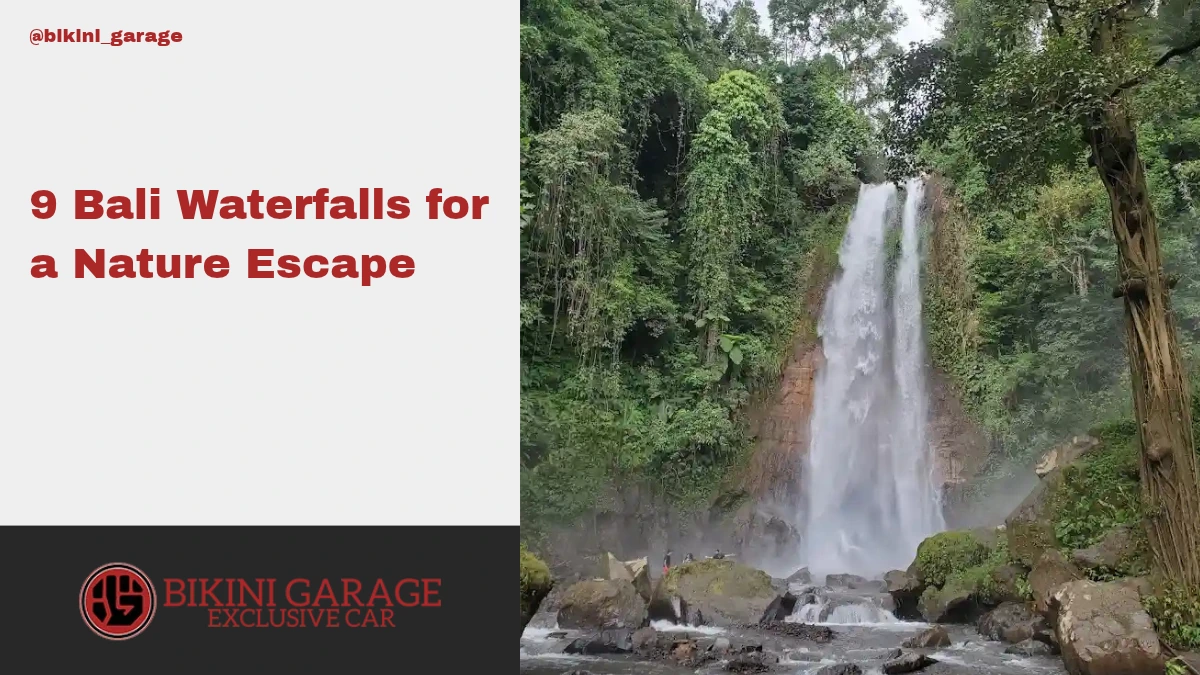
Bali's natural beauty extends beyond its beaches and mountains. Across the island, waterfalls offer a different kind of escape, with forest trails, cool air and the sound of flowing water.
If you want a break from a busy routine, these nine waterfall destinations provide ideas for a day in nature. Match the walk to your fitness, check the weather and follow local access rules before setting out.

Gitgit is one of northern Bali's better-known waterfall stops. Its position near the main road connecting Bedugul and Buleleng makes it relatively straightforward to include in a north-Bali itinerary.
The waterfall is commonly described as around 35 metres high and is surrounded by dense greenery. The forest setting and falling water make it an attractive place to pause during a longer drive through the highlands.
Wear shoes with grip for the approach, take care on wet surfaces and allow time for the return walk rather than treating the visit as a roadside photo stop.

Melanting and Munduk are two waterfall stops among the forested highlands around Munduk village in Buleleng. Their setting rewards visitors who enjoy walking as much as the destination itself.
Reaching Munduk Waterfall involves following a footpath. The waterfall is often described as approximately 15 metres high, with places to stop for food or a rest in the wider visitor area.
Melanting involves a longer walk, roughly one kilometre from the Munduk waterfall area depending on the route. The extra effort brings another forest scene to enjoy. Ask locally about the best current trail, conditions and access points before linking the two.
For a romantic nature-focused trip, see our Bali honeymoon guide.

Near Sambangan in northern Bali, Aling-Aling is known for a waterfall that divides into two streams near the top. The differing flows, steep cliffs and surrounding greenery give it a distinctive appearance.
The main fall is commonly described as about 35 metres high. The wider Sambangan waterfall area also has guided water activities at designated locations, but these must not be confused with permission to swim, slide or jump at the main Aling-Aling fall.
The earlier guide mentioned a four-metre-deep pool and a 12-metre slide. Those figures should not be used to judge safety or choose a jump: water depth, flow, rocks and permitted activities vary by location and conditions. Follow the local operator's instructions and restrictions, and enjoy the main waterfall from authorised viewing areas.
Related: Luxury glamping and nature stays in Bali.

Tegenungan can fit into a day visiting several attractions around Gianyar. Depending on your route, you could combine it with Bali Zoo or Sukawati Art Market.
Take time to appreciate the green surroundings and the force of the water rather than rushing straight to a photograph. The flow can be strong, especially after rain, so follow signs and staff instructions about access and water activities.
If you are continuing towards Ubud, plan a relaxed meal afterwards using our Ubud dining guide.

Nungnung sits in a cooler highland setting, often described as around 900 metres above sea level. The waterfall itself is approximately 50 metres high, framed by thick vegetation and forest.
The approach involves around 500 steps, followed by the climb back up. It can be a rewarding outing for visitors comfortable with a demanding stair walk, but it needs time, water and suitable footwear.
The shaded surroundings and spray create a refreshing atmosphere. Rest when needed and be realistic about your fitness, especially in humid weather.
Related: Glamping stays around Tabanan.

Jembong is in Ambengan village, surrounded by tropical trees and local cacao gardens. The wider landscape includes rice terraces, adding to the rural character of the visit.
The water flows down a steep slope rather than presenting the same shape as every other waterfall on this list. The original description puts the slope at more than 75 degrees and mentions a pool around one metre deep; these are approximate descriptions, not measurements to rely on for entering the water.
Enjoy the greenery from permitted areas and ask staff whether any bathing area is currently open. Pool conditions and access can change.

Dusun Kuning is near Taman Bali in Bangli. From the parking area, the guide describes an approach of approximately 300 metres on foot.
The walk passes green vegetation and clove-growing areas, making the approach part of the experience. Its relatively tucked-away position can feel quieter than Bali's most heavily visited waterfall stops, although visitor numbers vary.
Check the condition of the path before descending and leave enough energy and daylight for the return.

Sekumpul lies in the village of the same name in Buleleng. Its dramatic setting makes it one of the island's standout waterfall landscapes and a rewarding outing with friends who enjoy nature and walking.
The visit can involve paths, slippery rocks and river crossings depending on the route. Arrange an appropriate local guide and discuss the route, charges and conditions before starting.
Wear grippy walking shoes, bring drinking water and enough snacks, and protect your camera from spray. Take all rubbish away with you so the landscape remains enjoyable for the people who live there and future visitors.

Yeh Mampeh is in Les village. Its name is commonly translated as “flying water”, and the fall is described as more than 30 metres high.
The relatively secluded setting makes it an appealing addition to an exploration of northern Bali. Ask local residents or a guide about the current route and conditions, especially if you are unfamiliar with the area.
Bring suitable walking shoes, drinking water and any camera protection you need. Check the weather before leaving: heavy rain can change waterfall and trail conditions quickly.
Choose one or two stops that fit your route rather than attempting all nine in a single trip. Bali's mountain roads and walking approaches take time, and a relaxed pace leaves more room to enjoy the surroundings.
For mainland transport, ask Bikini Garage Bali about a suitable rental vehicle or driver. Confirm road access, parking and any restrictions for the car you choose. Comfortable transport can simplify the journey, but the final approach to many waterfalls remains on foot.
If you are travelling with children, compare the walks and access requirements in our family waterfall guide. For a slower nature break, see quieter places to enjoy Bali's scenery.